 Refine
Your anatomy & physiology textbook, remembered
Anatomy and physiology is the biggest textbook most students ever carry: every organ system, and how each one corrects the others. The names are the easy part. The feedback loops are what the exam asks about.
The kind of question you get
A drop in blood pressure ___ the baroreceptor reflex.
- triggers (right)
- switches off
- has no effect on
Why: baroreceptors in the carotid sinus and aortic arch sense the drop. The response raises heart rate and narrows blood vessels to bring pressure back up.
How it works
- Scan the pages you're assigned, or import your textbook's PDF. Using a free OpenStax textbook? Download its PDF and import it.
- Every chapter becomes something you can finish: a short read of what matters, and the full read when you need it. In a PDF, equations stay equations.
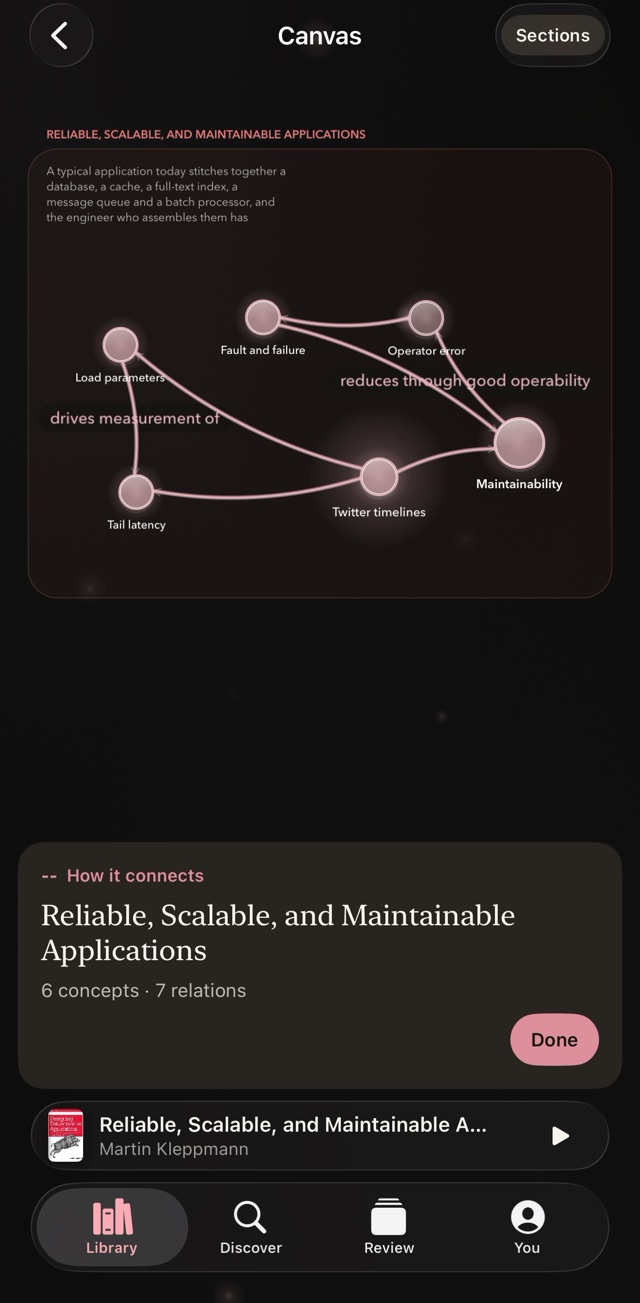
- A concept map of how the chapter's ideas affect each other.
- Questions about how it works, written from each chapter, with wrong answers that are wrong for a reason.
- A few minutes a day. Each question comes back just before you'd forget it, so the chapter is still there on exam day.
- Listen on the way to class, with each line lit as it's read.
What it is not
Refine helps you remember your textbook. It doesn't replace lectures or working the problems, and it won't do your homework. Studying for the MCAT from your course textbooks works the same way.
Other subjects
Biology · Chemistry · Organic chemistry · Physics · Calculus · Nursing
Read the chapter once. Know it on exam day.
Refine launches on October 19 on iPhone, iPad and Mac.
Get early access